
![$adHeader[0]['title']](https://www.bfisnews.com/images/bigyapan/1776181672_1100 x100.gif)



Beyond the Operating Room: How Four Friends Turned a Shared Dream into Nepal’s Neurocare Foundation

- BFIS News
- 2026 Jun 08 19:53
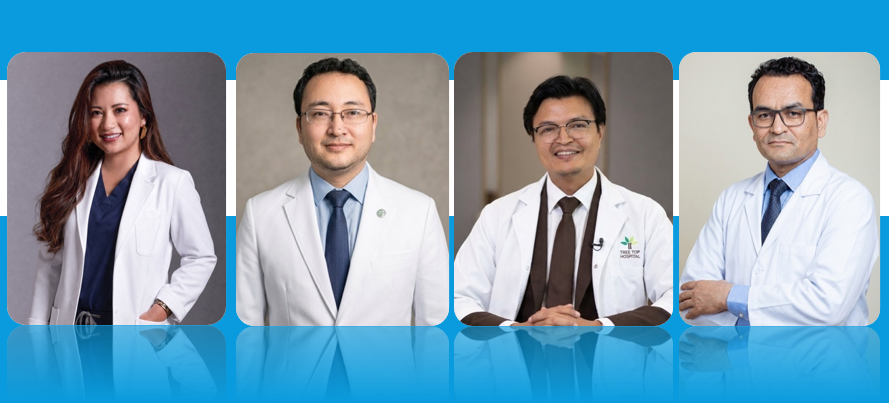

Born in a Hospital Canteen, Shaped by Heartbreak, United by a Mission
There is a particular kind of suffering that leaves a lasting mark on those who witness it. For doctors working in neurology and neurosurgery, it is often not the disease itself that is most painful, but the realization that many patients never had a fair chance. They arrive too late, after crucial hours, days, or even years have been lost. By then, treatment can only do so much.


More than a decade ago, four young medical officers working in Kathmandu found themselves repeatedly confronting that reality. Long before they became neurosurgeons, Dr. Prasanna Karki, Dr. Binod Rajbhandari, Dr. Rupendra B. Adhikari, and Dr. Anish Man Singh were simply friends trying to understand why so many neurological patients reached hospitals only when their conditions had become severe.
The answer they discovered would eventually give birth to Neurocare Foundation Nepal.
The Patients They Could Not Forget
During their early years in medicine, the four friends witnessed stories that would remain with them for years.
One was a stroke patient who arrived at the hospital seven days after symptoms first appeared. His arm had suddenly become weak, but his family believed time and prayer would bring recovery. By the time he reached specialist care, the critical treatment window had long passed.
Another was a farmer who had endured severe leg pain for years. He had visited multiple clinics and received treatments directed at the leg itself. Yet the true cause was not in the leg at all. A damaged lumbar disc in the spine was compressing a nerve and creating pain that radiated downward. The condition had remained undiagnosed because neither awareness nor specialized evaluation had reached him in time.
Cases like these became increasingly difficult to ignore.
The young doctors realized that many patients were not suffering solely because of disease. They were suffering because they lacked information. Families did not recognize warning signs. Communities misunderstood symptoms. Patients often navigated complex healthcare systems without knowing where to seek appropriate care.
The problem, they believed, extended beyond medicine itself.
Conversations Over Cold Tea
After exhausting hospital shifts, the four friends frequently gathered in the canteen. Between cups of tea and discussions about patients, they returned again and again to the same question:
What if people had known earlier?
Medical education taught them how to diagnose illness and perform treatments. What it could not teach was how to prevent the heartbreak of watching patients arrive when intervention was no longer possible.
The conversations slowly evolved into something larger than frustration. They began imagining a healthcare culture where awareness reached communities before disease caused irreversible damage.
They envisioned families recognizing the signs of stroke and seeking immediate medical attention. They imagined patients understanding that severe leg pain might originate in the spine rather than the limb itself. They wanted ordinary people to possess enough knowledge to make timely decisions about their health.
Most importantly, they wanted to create a system where neurological care was not confined to hospital walls.
Choosing the Same Path
The shared vision eventually influenced one of the most important decisions of their professional lives.
All four chose neurosurgery.
Their journeys began together at Annapurna Neuro Hospital in Maitighar, Kathmandu, where they worked as medical officers and gained firsthand exposure to neurological disorders. The hospital became more than a workplace; it became the environment where their professional identities and shared aspirations took shape.
As years passed, their paths diverged geographically but remained connected in purpose.
Dr. Prasanna Karki and Dr. Rupendra B. Adhikari pursued advanced neurosurgical training in Japan. Over five years, both completed neurosurgery residency programs and earned PhDs while training within highly specialized healthcare systems known for precision and discipline.
Dr. Binod Rajbhandari completed three years of general surgery training in Nepal before undertaking an additional three years of neurosurgical training at Teaching Hospital.
Meanwhile, Dr. Anish Man Singh traveled to China, where he spent three years training in neurosurgery and gaining experience within one of the world’s busiest neurosurgical environments.
Though separated by continents, languages, and demanding training schedules, the four remained closely connected. They continued exchanging ideas, discussing cases, and refining the vision they had first developed years earlier.
Distance did not weaken the dream. It strengthened it.
Realizing Surgery Was Not Enough
When their training was complete, the four neurosurgeons returned to clinical practice with advanced skills, international exposure, and years of experience.
Yet they soon found themselves confronting the same reality they had observed as students.
Surgery saves lives. It restores function. It relieves suffering.
But surgery begins only after something has already gone wrong.
By the time a patient reaches the operating room, a tumor has already grown, a stroke has already occurred, or a spinal disorder has already caused damage.
The founders often describe clinical treatment as placing a bandage over a wound. Necessary and valuable, certainly. But not sufficient if the underlying causes remain unaddressed.
The deeper challenge, they believed, was prevention.
And prevention begins with awareness.
The question that had first emerged in a hospital canteen returned once again:
How can people be reached before it becomes too late?
The Birth of Neurocare Foundation Nepal
Two years ago, that question transformed into action.
Neurocare Foundation Nepal was established with a mission that extends beyond clinical treatment. Rather than focusing solely on disease management, the organization seeks to improve neurological health through education, awareness, early diagnosis, and community outreach.
For the four founders, the foundation represents the realization of a vision that had been developing quietly throughout their careers.
Since its establishment, the organization has conducted free health camps in underserved communities where access to neurological care remains limited. In many of these areas, residents have never had the opportunity to consult a neurosurgeon.
The foundation also works extensively to promote awareness about neurological diseases, particularly stroke. Through educational campaigns and public engagement, it encourages people to recognize warning signs and seek immediate medical attention when symptoms arise.
The message is straightforward but potentially life-saving: neurological emergencies cannot wait.
Every conversation, every awareness program, and every outreach activity is designed to reduce delays that often determine whether patients recover fully or live with permanent disability.
A Dream Still Unfinished
Today, the four friends who once sat together as exhausted young medical officers have become experienced neurosurgeons united by a common purpose.
Their operating rooms remain important places of healing. Yet their work increasingly extends beyond hospitals, reaching villages, schools, communities, and families across Nepal.
The founders acknowledge that their journey is far from complete.
The challenges they observed years ago still exist. Stroke awareness remains limited in many communities. Neurological disorders continue to be misunderstood. Access to specialized care remains unequal.
But unlike the students they once were, they now possess an institution through which they can act.
On World Brain Tumor Day, their story serves as a reminder that healthcare is not only about treating illness. It is also about preventing avoidable suffering through knowledge, awareness, and timely action.
The wound they witnessed as young doctors has not disappeared.
Yet through Neurocare Foundation Nepal, they are working to ensure that future generations face it with something stronger than hope alone.
They are building a future where awareness arrives before disease, where communities recognize danger signs early, and where fewer patients lose precious opportunities simply because nobody told them what to look for.
For four friends bound by the same canteen, the same dream, and the same heartbreak, that mission has become the work of a lifetime.
शेयर गर्नुहोस
प्रतिक्रिया दिनुहोस्
सम्बन्धित समाचार









प्रतिक्रिया